

The Tempered Vessel
Part 1: The Coven Is Not What You Think It Is


The Tempered Vessel
Part 1: The Coven Is Not What You Think It Is
This is an eight-part exploration of the book “The Anatomy of a Witches Coven” investigating the book’s core ideas. Written for practitioners who want to work through the material in real time and who want something more than a reading experience: something to argue with, to journal alongside, to bring into their coven conversations.
This is part one.
Introducing Anatomy of a Witches’ Coven
Let me begin with a confession. I’ve watched enough covens fall apart over the last five decades to fill a very depressing anthology. And I started my first coven in 1973. That’s a lot of implosions to witness. A lot of dropped and cracked chalices. And a lot of people I deeply respected eventually blocking each other on whatever the relevant social technology of the era happened to be.
For a long time, the explanation we reached for was drama. “That group was just full of toxic drama.” Or the bad apple theory, one difficult person who ruined it for everyone. Both explanations are satisfying in the moment, and both are, frankly, lazy. They let the rest of us off the hook and leave us no wiser about what actually happened — or what to do differently next time.
What I’ve come to understand, after more years in the Craft than most people have been alive, is that there is a physics to coven collapse. It follows patterns. It has a structure. And once you can see that structure, the whole enterprise — the building, the breaking, the surviving, and the transformation — starts to make a different kind of sense.
That is what Anatomy of a Witches’ Coven is about.
What The Book Is (And What It Isn’t)
Let me be direct about what you’re not holding. This is not a spell book. There are no love spells, no instruction on which candles to use for which purpose, no beginner’s guide to calling quarters. There are already plenty of those, and they serve their purpose.
This is a working manual. It’s closer in spirit to a structural engineer’s handbook than a grimoire — though I admit “structural engineering” lacks a certain occult glamour. The book is concerned with the architecture of coven life: how a group of human beings, each dragging their own histories, wounds, talents, and unresolved parental issues into a room, can actually do transformative magickal work together without the whole enterprise ending in tears and a group chat that nobody quite knows how to leave.
It draws on three sources: the imagery and stages of Western alchemy, Jungian and archetypal psychology, and the lived experience of covens I’ve helped build — particularly Nuit’s Veil coven within the Dark Circle Collective. Dark Circle itself has been running since 1983. We’ve had, as I note in the acknowledgements, “a full, and some might say colourful” history. You could say I’ve done my fieldwork.
The depth psychology in this book is real. The alchemical symbolism is real. But neither requires a PhD to work with, and I’ve written it so that any sincere practitioner — whether you’ve been in the Craft twenty years or two — can pick it up and find it useful. The language might occasionally be unfamiliar. I explain what the terms mean. You don’t need to have read Jung to follow the argument; it helps if you’ve sat in a ritual circle with people you both love and find intermittently maddening.
The Central Idea: The Coven as Alchemical Vessel
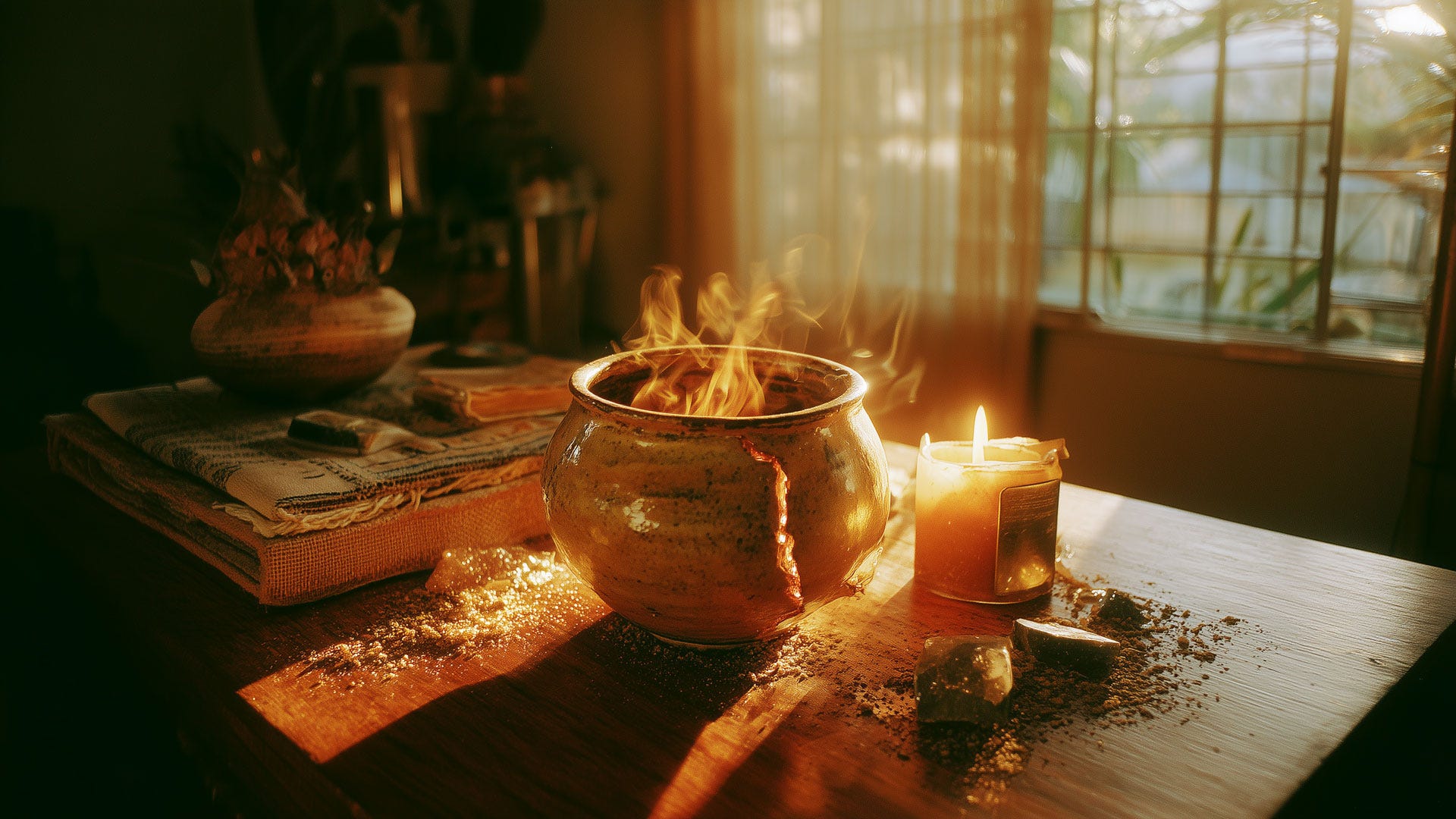
The core thesis of the book is this: a coven is not a social club, a support group, or a fan club for the nocturnal. It is an alchemical vessel. A crucible. A sealed container designed to hold pressure, generate heat, and transform what’s inside.
Think about how alchemy actually works as a physical process. You place your raw material inside a vessel. You seal it. You apply heat — sustained, intense heat. If the vessel has even a hairline fracture, it shatters. If the seal isn’t tight, the pressure escapes, and the transformation fails. The whole enterprise depends on the integrity of the container.
Now apply that to a group of witches sitting in a circle.
The individual witches sit around the vessel — they are the structural support. Inside the vessel is what I call the coven psyche: not a hive mind, but a swirling, living field of emotion, myth, and collective energy that is genuinely greater than the sum of its parts. It is an entity in its own right, and it has its own intelligence. Below the vessel is the fire — the work itself: the ritual, the trance states, the drumming, the vulnerability, the sustained engagement with psychic reality that is the actual substance of magickal practice.
And above the vessel? The vapours.
This is the part people forget to plan for.
When you heat up a sealed container full of human beings doing serious ritual work, things evaporate from the individual psyches and rise to the top. The shadow — which in Jungian terms means the parts of ourselves we’ve disowned, pushed down, and refused to acknowledge — doesn’t simply vanish when you step into circle. It rises. Envy rises. Projection rises. The unspoken longing to be the special one rises. The resentment about who didn’t wash the ritual chalice rises. It all rises.
In a normal social group, you would simply leave at this point. You’d say “the vibes are off” and go find a better group. In a coven — a real one — the goal is to keep the lid on. To hold the pressure. Because if the vessel is strong enough, and the people inside are mature enough to contain those vapours without acting them out (without starting a fight or sleeping with someone they shouldn’t, to put it plainly), something else becomes possible.
The vapours condense. Something descends. The contacted coven state — the moment when an archetypal intelligence, a deity, a mystery, actually moves through the group — becomes achievable. The magic stops being performance and starts breathing back.
That’s what we’re building toward. That’s the payoff for all the pressure.
Why Covens Actually Implode
Projection and transference are the two great engines of coven collapse, and they are worth understanding clearly.
Projection is what happens when you take something you find unacceptable in yourself — say, a deep need for attention and validation — and unconsciously place it onto someone else. You stop feeling your own shame and start feeling irritated by the woman across the circle who is “so desperate for attention.” The hot coal gets tossed out of your pocket into hers. You feel immediate relief. The room, however, is now polluted. You are no longer in relationship with your coven mate; you are in relationship with your own disowned shadow that’s wearing her face.
Transference is about time. Specifically, it’s about the past climbing into the present. The coven’s leaders — high priest, high priestess, elders — become screens onto which we unconsciously project unresolved parental material. The high priest who asks everyone to please arrive on time is suddenly, emotionally, the critical father who never thought you were good enough. The response is wildly disproportionate. It is. Because it’s not coming from the present.
None of this is anyone’s fault, exactly. It is, as I say in the book, the physics of the vessel. When you apply heat, the material responds. The question is whether you have a framework for understanding what’s happening — or whether you simply conclude that someone is being a jerk and proceed accordingly.
The framework matters enormously.
A Map Through the Darkness:
The Rosarium Philosophorum
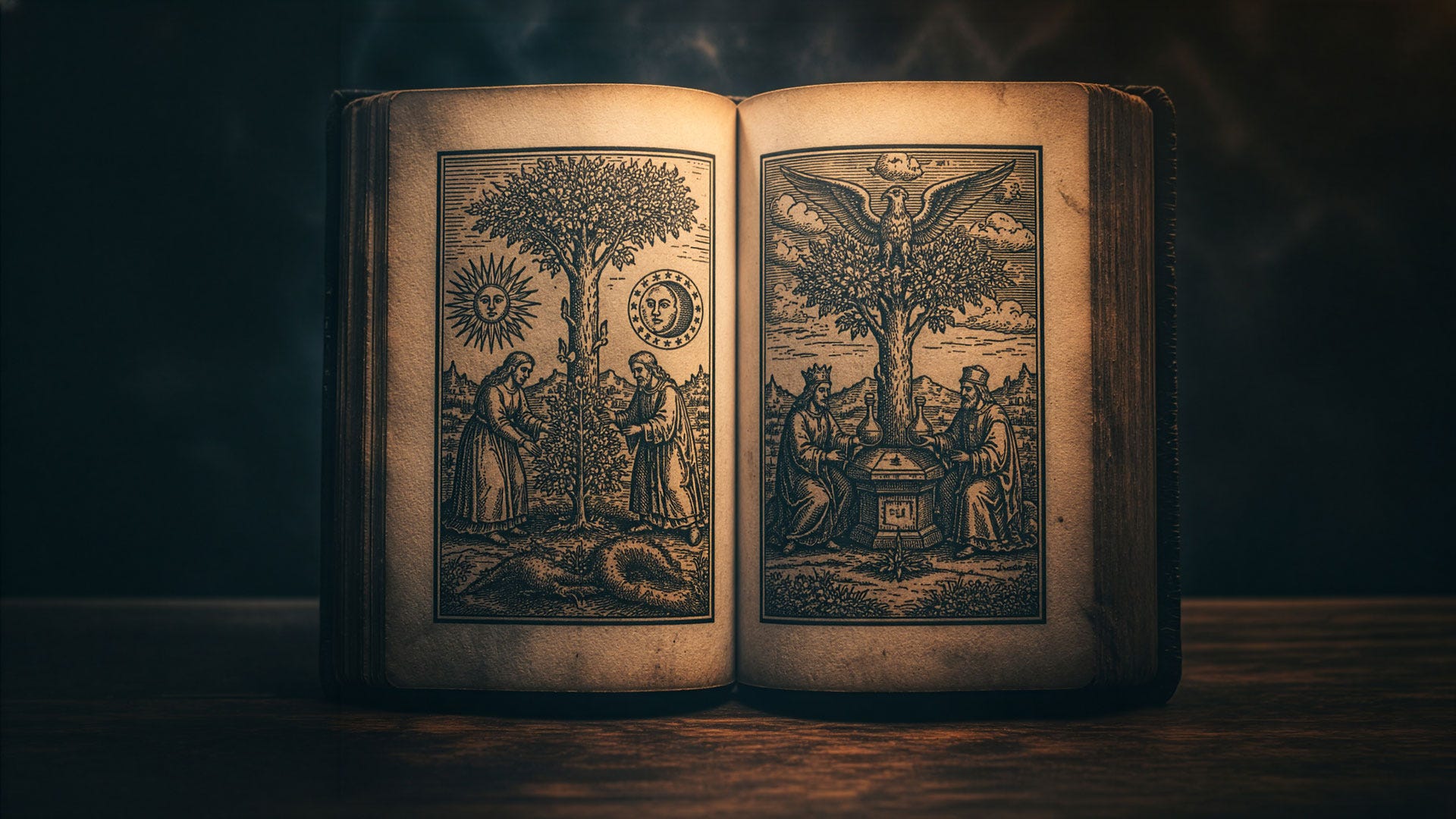
The most practical gift this book offers is a map. Specifically, a medieval alchemical text from 1550 called the Rosarium Philosophorum — a series of woodcut images depicting a king and queen undergoing a chemical wedding, death, and eventual resurrection. Carl Jung used these stages extensively to understand the psychology of transformation. I’ve applied them to the life cycle of a coven.
The Rosarium gives us ten stages, and I want to be absolutely clear: this is a compass, not a ladder. You don’t climb it once and graduate. You cycle through it, in the way seasons cycle. You don’t win winter and then get to have summer permanently. Winter comes back around, just differently.
The stages begin in the Mercurial Fountain — the heady excitement of a new group forming, everything possible, the vessel mostly imaginary. They progress through the honeymoon of the King and Queen (what I call the Sinister Pact — not evil, but unconscious: everyone agrees to project their ideals onto each other and call it compatibility). Then the masks begin to slip, the Naked Truth emerges, and the group settles into the warm comfort of the Bath — a genuinely pleasant stage, though one where it’s tempting to stop working altogether and just enjoy the warmth.
The Conjunction Underwater, Stage Five, is the peak: the Sacred Marriage, the moment when the group feels like a single organism, when the magic flows effortlessly, when you finish each other’s sentences and the rituals sing. It is, naturally, where everyone assumes they’ve arrived. It is not where they’ve arrived.
Because what comes next is Stage Six: Death in the Tomb. The Nigredo. The Rot.
This is where most covens die. Not because anything has gone wrong — but because everything has gone exactly right, and nobody prepared for it.
The high wears off. The projections fall away. You look at the person who six months ago seemed like a god or goddess and you see, with a clarity that feels almost cruel, a tired human being with a bad knee and inconsistent time management. The telepathy is gone. The rituals feel mechanical. You don’t want to go. You sit in the car park wondering if you can claim a sudden migraine.
The instinct is to run. To say the group has become toxic. To find a new group with better energy and begin the process again.
Here’s what I want you to know instead: the rot is not failure. It is compost. The old form of the group — the one built on projection and idealisation and the sinister pact of Stage Two — has to die before anything real can grow. You cannot have the gold without the blackening. There is no way around it, only through.
What comes after the rot, if you stay — the gradual return through stages of grief, forgiveness, and the slow reconstruction of genuine relationship — creates a bond that cannot be manufactured. Having known each other’s shadow and chosen to remain is a different kind of loyalty than the enthusiastic connection of Stage One. It has weight. It has substance. It is what real initiation actually looks like.

Who This Book Is For
I want to speak directly to the person who picked this up because they’ve been through a coven implosion. Who joined something with genuine hope, did the work sincerely, and watched it fall apart anyway — or who is in one right now and doesn’t understand why everything that started so well is unravelling.
You’re not crazy. The pressure is real. The process you’re experiencing has a name, a shape, and a reason. And while I can’t promise that every coven can or should be saved, I can tell you that the falling apart itself is often the most important thing that’s happened to that group. The question is whether you have a language for it — and what you choose to do with it.
This book gives you that language.
It also gives you practical tools: frameworks for building coven agreements before you need them (it is much easier to make agreements about how to handle conflict when nobody is in conflict), diagnostic questions for identifying which element your coven is currently lacking, a map for locating where in the Rosarium cycle your group actually sits, and a set of principles for authority that prioritise service over ego and mystery over rank.
That last point — mystery over rank — is, I think, the most quietly radical idea in the book. It simply states that if a tradition, a hierarchy, or a rule is blocking contact with the actual mystery, the rule must yield. Hierarchy exists to serve the work. The work does not exist to serve the hierarchy. In practice, this requires a genuinely secure leader to hold. Insecure leaders, in my experience, find the concept terrifying. This is useful information.
A Note on Accessibility
The book draws on depth psychology and alchemical symbolism in ways that are genuine and substantive. I haven’t simplified the ideas to the point of dishonesty. But I have explained every term I use, and the framework is built to be worked with, not merely admired. Each section includes what Part III calls the Field Manual Sequence — practical checklists, diagnostic tools, and exercises that bring the theory into direct contact with your actual group life.
You don’t need to have read Jung. You don’t need a lineage or a degree or anyone’s permission to engage with this material. You need to be a sincere practitioner who is willing to look honestly at what’s happening in your circle — and to hold, even briefly, the possibility that the difficulties you’re experiencing are not obstacles to the work. They are the work.
The question the book finally asks — and it’s one I’ve been sitting with for fifty years — is not whether you can get what you want from a coven. That’s low magick’s question. The high magick question, the coven question, is this: Can you become someone capable of holding what you’ve asked for?
That’s the task. And it turns out, it’s more than enough to be getting on with.
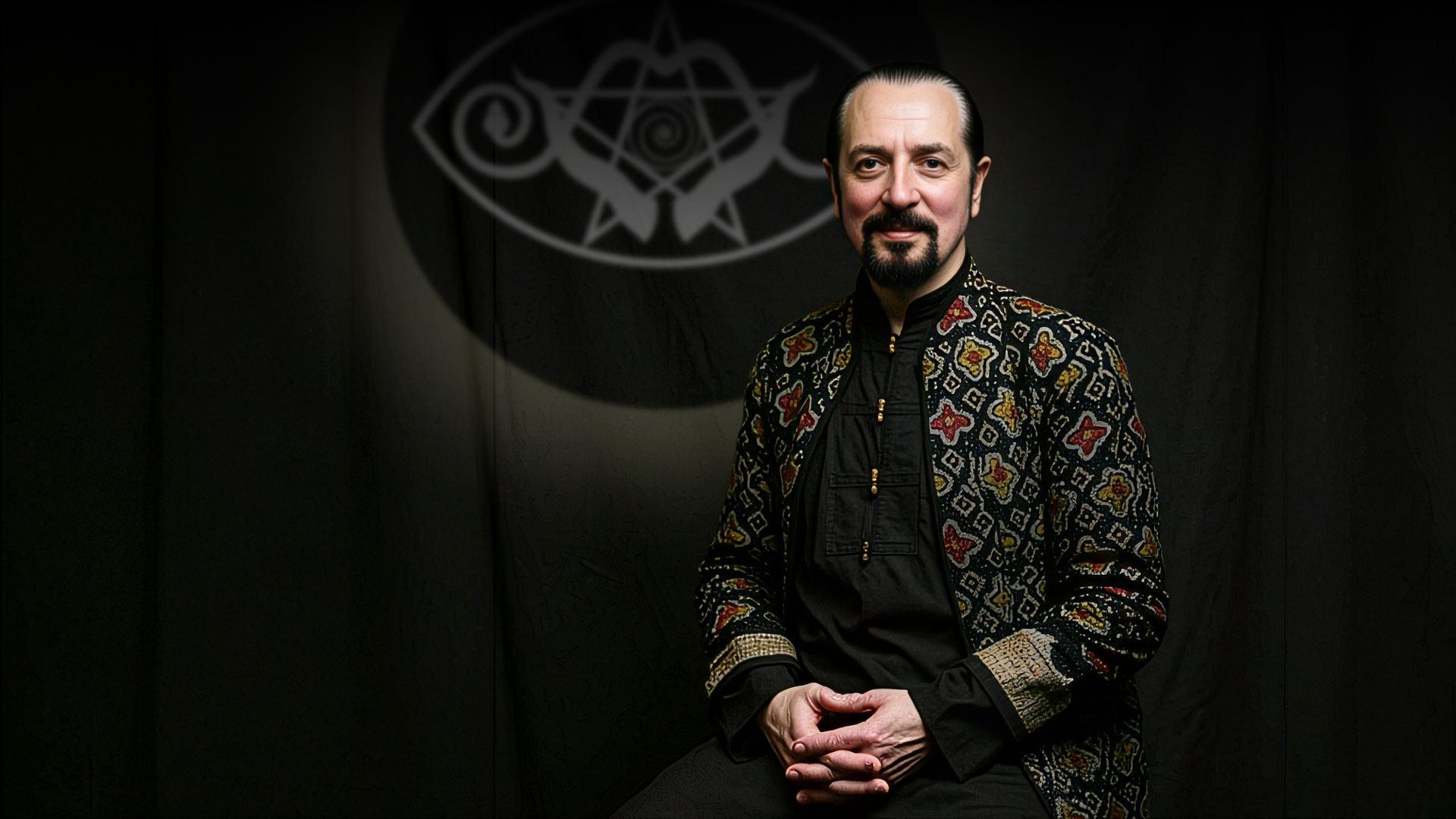
Bio: Tim Ozpagan Hartridge is a witch, teacher, and occult practitioner based in Sydney, Australia. He has been active in the Craft and Western Mystery Traditions since his early teens and founded his first coven in 1973. He is the founder of WitchesWorkshop and a founding member of the Dark Circle Collective.
Anatomy of a Witches’ Coven: Coven Work as an Alchemical Vessel — Power, Structure & Transformation in Witchcraft is available now through WitchesWorkshop and most online stores. It is Book One of the Modern Apprenticeship to Witchcraft series.
On Monday 18th May 2026, I join Frances on her YouTube channel, The In-Between Spaces. The channel itself is beautifully named. Frances describes her work as moving through the mystical, the magical, and the mythological — those liminal places between the seen and unseen, between ordinary consciousness and the older, stranger, more mythic currents that still move beneath our lives.

Her interview series, The Magic in You, sits within that larger landscape. It’s where Frances speaks with witches, authors, occultists, magical teachers, and practitioners about what it actually means to live a magical life — not just as an idea, but as a path, a practice, and sometimes, let’s be honest, a peculiar vocation.
You can find the episode (from Monday 18th May 2026) on The In-Between Spaces, and in the series The Magic in You. I’m very pleased to be part of it. See:
https://www.youtube.com/@francesbillinghurst
Paid subscribers of WitchesWorkshop on Substack can continue below with the Bonus Reflection Guide for this article.
What began as a series of eight companion pieces has grown into something more practical: a guided reflection and practicum sequence for Anatomy of a Witches’ Coven. Taken together, the articles, questions, and exercises form a kind of mini-course — a way to work with the book actively, rather than simply read it.
The intention is simple: to help you bring the ideas into your own coven life, group history, private reflection, or future circle-building.
